English
吃饭前的约定 The deal before meal
吃饭前的约定
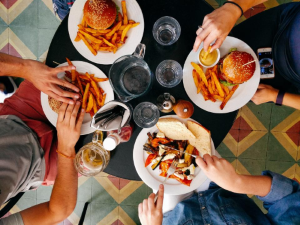
This humorous story is essentially a harmless joke. Four friends went to a restaurant, but each had to connect their surnames with the dishes on the table with a saying or idiom. Did they manage to do it? What Chinese idioms have they used? And what was the result? Keep on reading.
As most students learning Chinese may have already noticed, there are numerous idioms or sayings in Chinese language. To understand and master these idioms can be a challenge, as they are mostly closely linked with historical facts or stories. One effective method to learn Chinese idioms is to research the background information of an idiom and understand how the idiom is formed.
In this short story, four idioms are used:
1> 黄鼠狼偷鸡 huángshǔláng tōu jī: Literally: 黄鼠狼(huángshǔláng, weasel) steals the hens. As an animal, 黄鼠狼 is skillful in hunting small animals such as mouses and rabbits. They are also infamous for their habits of breaking into farms and stealing hens. Because of this, in Chinese culture, 黄鼠狼 is often depicted as a symbol of slyness and sneakiness.
2> 姜太公钓鱼 jiāngtàigōng diào yú: Literally: 姜太公(jiāngtàigōng) goes on fishing. 姜太公 (B.C 1128-B.C 1016) was a Chinese noble who helped kings of Zhou to overthrow the Shang kingdom in ancient China. He pretended to be busy with fishing (without his fishing tools getting into the water), but in fact he was “fishing” for the then-leaders to come find him.
3> 秦始皇兵吞六国 qínshǐhuáng bīng tūn liù guó: Literally: 秦始皇(qínshǐhuáng) forcefully acquired six countries. 秦始皇 (B.C 259 – B.C 210) was the first emperor in Chinese history. He was also the first leader to unite the entire China, having used his troop to destroy the 6 other major regional countries at that time.
4> 孙悟空大闹天宫 sūnwùkōng dà nào tiān gōng: Literally: 孙悟空(sūnwùkōng) rebels against heaven. 孙悟空, known as Monkey King, is the main character from one of the most famous Chinese classical novels: Journey to the West. In the novel, he was a monkey born from a stone who acquired supernatural powers through Taoist practices. But he was very rebellious. He rebelled against heaven and as a result was imprisoned under a mountain by the Buddha. He later accompanied the monk Xuanzang on a journey to retrieve Buddhist sutras from India.
Sì gè rén dào fàndiàn chī fàn, yí ge rén xìng Sūn , yí ge rén xìng Jiāng , yí ge rén xìng Huáng , yí ge rén xìng Qín .
四个人到饭店吃饭,一个人姓 孙 ,一个人姓 姜 ,一个人姓 黄 ,一个人姓 秦 。
Chī fàn qián, tāmen sì ge rén yuēdìng , měi rén shuō yí ge chéngyǔ , bǎ zìjǐ de xìng hé zhuō shàng de cài liánxì qǐ lái, shuō de hǎo de biérén jiù bù néng chī nà dào cài.
吃饭前,他们四个人 约定 ,每人说一个 成语 ,把自己的姓和桌上的菜 联系 起来,说得好的 别人 就不能吃那 道 菜。
Yúshì, xìng Huáng de xiān shuō:” huángshǔláng tōu jī “, jiù bǎ zhuō shàng de yì pán jīkuài nádào le zìjǐ miànqián;
于是, 姓黄的 先 说:” 黄鼠狼偷鸡 “,就把桌上的一盘 鸡块拿到 了自己面前;
jiēzhe ,xìng Jiāng de shuō:” Jiāng Tàigōng diào yú “, jiù bǎ yì pán yú yě duāndào zìjǐ de miànqián;
接着 ,姓姜的说:” 姜太公钓鱼 “,就把一盘鱼也 端到 自己的面前;
Zàishì , xìng Qín de shuō:” Qín Shǐ Huáng bīng tūn Liùguó “;Bǎ qíyú de cài quánbù duāndào zìjǐ miànqián。
再是 ,姓秦的说:” 秦始皇兵吞六国 “;把其余的菜 全部 端到自己面前;
Zuìhòu , xìng Sūn de kàndào méi shénme cài le, jí le, tā shuō “ Sūn Wùkōng dà nào tiāngōng “, yúshì bǎ zhuōzi chuàifān le.
最后 ,姓孙的 看到 没什么菜了, 急 了,他说” 孙悟空大闹天宫 “,于是把桌子 踹翻 了。
Jiéguǒ dàjiā dōu méi chī dào fàn.
结果 大家都没吃到饭。
Vocabs:
Sūn 孙: Chinese surname
Jiāng 姜: Chinese surname
Huáng 黄: Chinese surname
Qín 秦: Chinese surname
yuēdìng 约定: agreement
chéngyǔ 成语: set phrase; idiom
liánxì 联系:to connect; to relate; to contact
biérén 别人: others; someone else
dào 道: measure word for dishes
yúshì 于是: thereupon; hence; consequently
xiān 先: first
huángshǔláng tōu jī 黄鼠狼偷鸡: (idiom) the weasel stealing chickens
jīkuài 鸡块 : chicken pieces; chicken nuggets
nádào 拿到: to get; to get possession of
jiēzhe 接着: then; afterwards
Jiāng Tàigōng diào yú 姜太公钓鱼: (idiom) Jiang Taigong Fishing
duāndào 端到: to take; to bring
zàishì 再是: and then
Qín Shǐ Huáng bīng tūn Liùguó 秦始皇兵吞六国: Emperor Qin Shihuang swallowing the six states by force (State Qi, State Chu, State Yan, State Han, State Zhao and State Wei)
qíyú 其余: the rest
quánbù 全部: all; whole
zuìhòu 最后: at last; finally
kàndào 看到: to see
jí 急: to worry; to be anxious
Sūn Wùkōng dà nào tiāngōng 孙悟空大闹天宫: (idiom) Sun Wukong making an uproar in heaven
chuàifān 踹翻: to kick over
Jiéguǒ 结果: as a result
Show English Translation
Homework:
1. How did each person connect his surname with the dishes?
2. Research (online & with dictionaries) the meanings and usage of the four idioms mentioned in the story.